I read a lot of other blog sites, one topic that seems to be avoided is what comes after you decide or have to come off the road? Here in Canada, some municipalities are coming down hard on people living in RV’s, their excuse is that they don’t meet CSA standards for housing and this includes park models.
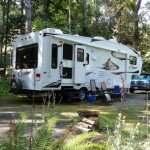
I have land in a rural municipality, they now require a development permit to park a RV, and it’s not allowed to be hooked to any utilities, and must be at least 16.5′ from the property line, as compared to 5′ for any building. No skirting, decks, parking pads, blocking are permitted. You are not allowed to stay for more than 14 days in a parked RV. You don’t get a warning letter anymore, first offence is $500, second $1000, third and subsequent $5000. No grandfathering is permitted. All this has been passed in the last 6 months in a fairly unadvertised campaign, only visible if you checked the county website on a regular basis.
Part of the reason this has occurred is that there is a lack of areas left that you can camp on, most private campsites can charge what they want as they have huge waiting lists, the province closed all of it’s campsites many years ago, and the proximity to Edmonton. Many people bought marginal land, moved their RV’s onto the site and used them as summer cottages. Wealthier neighbours built houses, and then didn’t want RV’s next to them. Seeing as taxes on an undeveloped site run about $85 a year, and a site with a house pays well over a $1000 a year, the house owners have a lot more influence at county council. Probably generator noise on weekends was a contributing factor as well. I wouldn’t be surprised if new sales of land in the area end up with a requirement to build within a specific time period.
So what do you do when you are actively not wanted? With the new land use bylaws, the property doesn’t have much resale value. You basically have no choice but to build at least a small house, and it has to be built to code, no summer cabins. It’s pretty obvious to me that someone thought long and very hard on a legal way to exclude RV use other than in commercial parks.


 Roger & Sue Fell 20 hours, 37 minutes ago.
